



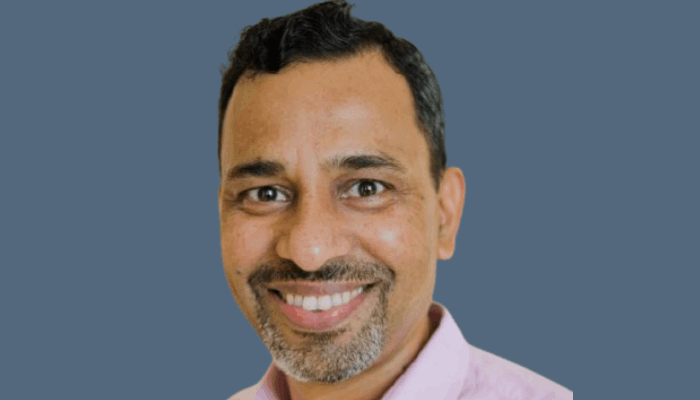
As Managing Director & Vice President – Sales (India & SAARC), Sophos, Sunil leads Sophos’ India & SAARC business. He is responsible for driving Sophos’ ‘channel best’ strategy and business across end-user and network security product segments in the region, while strengthening Sophos’ market leadership.
Sunil has over two decades of industry experience across senior roles at leading technology companies. Prior to Sophos, he was national manager for strategic alliances at McAfee. He had also worked with EMC and IRIS computers.
Sunil Sharma, Managing Director & Vice President – Sales (India & SAARC), Sophos
Creating a safer internet therefore requires a fundamental change in approach, one that continuously verifies who is accessing systems, from where, and under what conditions, rather than relying on outdated assumptions of trust
Safer Internet Day is a timely reminder that the internet is no longer just a place we visit. It is the environment in which modern work happens. It is where we collaborate, transact, innovate, and increasingly, where artificial intelligence operates on our behalf. As India races toward its trillion-dollar digital economy ambition, ensuring a safer internet is no longer solely about protecting corporate networks. It is about safeguarding people, identities, and the digital workspaces that power everyday business.
The traditional security perimeter has all but disappeared. Employees access applications, data, and AI tools from anywhere, across cloud platforms, SaaS environments, personal devices, and partner ecosystems. In this reality, identity has emerged as the most critical line of defence, and how organisations govern digital work directly shapes their cyber resilience.
Identity misuse sits at the core of modern cyber risk
Today’s cyberattacks rarely begin with sophisticated technical exploits. More often, they start with compromised credentials, abused access, or manipulated users. Identity now extends beyond usernames and passwords to include devices, service accounts, APIs, and even AI-driven tools acting autonomously on behalf of employees.
Cybercriminals are acutely aware of this shift. Credential theft and identity abuse remain among the most common entry points for ransomware, data breaches, and financial fraud. Creating a safer internet therefore requires a fundamental change in approach, one that continuously verifies who is accessing systems, from where, and under what conditions, rather than relying on outdated assumptions of trust.
The browser is now the enterprise control plane
More than 80 percent of the modern workday unfolds inside a web browser. From collaboration platforms and cloud applications to generative AI tools, the browser has become the primary gateway to enterprise data and digital services.
Yet this also makes it a prime source of risk. Shadow IT and shadow AI frequently emerge here, as well-meaning employees turn to unsanctioned tools or public AI platforms, sometimes exposing sensitive information unknowingly. Without visibility and governance at the workspace level, organisations remain blind to how data is accessed, used, and shared online.
This is why secure web browsing is no longer optional, it is foundational. Solutions like Sophos Workspace Protection are designed to make the browser a point of defence rather than vulnerability. By securing digital work where it actually happens, organisations can protect data in real time, prevent risky uploads or downloads, and guide safer employee behaviour without stifling productivity.
A truly safer internet means embedding security into everyday digital work, not layering it on as an afterthought.
AI innovation must be balanced with responsibility
AI is rapidly becoming embedded in daily workflows, driving efficiency, creativity, and decision-making across industries. However, adoption is often outpacing governance. From data leakage through public AI tools to deepfake-enabled social engineering, the risks are tangible and escalating.
Safer Internet Day underscores that responsible AI use is a collective responsibility. Organisations must establish guardrails that empower employees to leverage AI safely while ensuring sensitive data, identities, and systems remain protected. Strong visibility, clear policies, and real-time monitoring are essential to keeping AI innovation both powerful and secure.
From compliance to resilience
For too long, cybersecurity has been viewed primarily through a compliance lens. While compliance is necessary, it does not equate to safety. True cyber resilience is built on early detection, rapid response, and continuous monitoring of identity-driven risk, especially in a distributed, cloud-first, browser-centric world.
This is where identity threat detection and response becomes critical. By identifying compromised credentials, anomalous behaviour, and access misuse early, organisations can prevent small risks from snowballing into major incidents.
A shared responsibility for a safer internet
Safer Internet Day is more than a moment of awareness, it is a call to action. Cybersecurity is no longer just an IT concern. It is a leadership priority, a workforce imperative, and a trust enabler.
Organisations that prioritise identity protection, secure web browsing, and responsible AI adoption will not only reduce their risk exposure but also contribute to a safer, more resilient digital ecosystem for employees, partners, and customers.
As digital transformation accelerates, safeguarding how we work online is fundamental to sustaining trust, innovation, and growth in the years ahead.
