



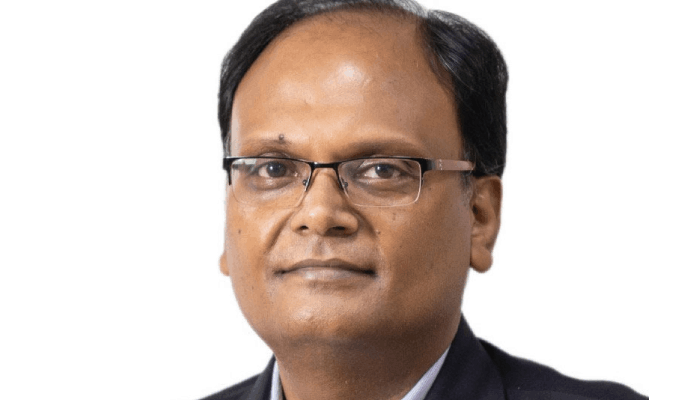
Vibhor Agarwal, CEO, Supertron Electronics
A tech leader with an impeccable track record, Vibhor Agarwal is currently serving as the CEO of Supertron Electronics Pvt. Ltd. Vibhor represents a rare blend of visionary leadership and deep strategic understanding. Armed with 32 years of solid experience in the IT industry, he has played a crucial role in transforming Supertron into one of the Top Five IT hardware VADs in India.
By Vibhor Agarwal, CEO, Supertron Electronics
Behind the scenes, tech distributors serve as the ‘secret engine’ of the digital revolution — rather than acting as a mere warehouse for inventory, the modern distributor functions as a ‘strategic center,’ transforming global products into individualized solutions, ultimately enabling every region whether it is bustling metros or rural hubs to compete in the modern digital landscape.
In the high-stakes world of Indian technology, attention often centers on the ‘what’—the trendiest new smartphone, the quickest cloud server, or the most sophisticated AI software. However, this focus overlooks a fundamental reality: the technology and data housed in corporate data centers or on retail shelves do not simply appear there. Behind the scenes, a significant amount of complex work drives the entire process from factory to fingertip. In a country as vast and complex as India, technology distributors serve as the ‘secret engine’ of the digital revolution. Consequently, while consumers worldwide admire the sleek design of a final product, it is the distributor who is deeply embedded in its entire lifecycle. Rather than acting as a mere warehouse for inventory, the modern distributor functions as a ‘strategic center.’ In this role, they transform global products into individualized solutions, ultimately enabling every region—from bustling metros to rural hubs—to compete in the modern digital landscape.
Solving the “Last Mile” Challenge: A Logistical Puzzle
India isn’t just one market; it’s a vast array of micro-markets, each with unique logistical challenges. For operators, moving technology across India presents a daily challenge that demands strong problem-solving abilities. While digital storefronts hold significant value, it’s the physical hubs in Tier 2 and Tier 3 cities that really make an impact. A website can process an order, but it is a local warehouse that delivers on that promise. By keeping stock points decentralized, distributors guarantee that a small business in Indore or a school in Coimbatore won’t have to endure long waits for essential infrastructure. This closeness not only shortens lead times but also significantly boosts confidence in the local economy.
The distribution network also ensures speed to market parity. In the tech world, “last year’s model” is often obsolete, so distributors work to ensure that the latest cybersecurity hardware or high-end workstation hits a storefront in a small-town district at the same time it launches in a major metro. They remove the technological delays that previously hindered non-metropolitan India, creating equal opportunities for businesses, no matter their location.
Empowering the Local Expert: The Channel Partner
The DNA of Indian IT distribution is not found in cold algorithms, but in the relationships between distributors and thousands of local retailers and system integrators. These channel partners are the local experts who walk into a customer’s office to set up their first server, and their success is inextricably tied to the distributor’s own operations. Most of these local tech businesses are small-to-medium enterprises that may not have the liquid capital to buy massive amounts of inventory upfront. Distributors act as the financial shock absorbers of the industry by offering credit lines and flexible stock arrangements. This allows a local business owner to take risks, bid on larger contracts, and grow without the fear of a cash-flow crunch. As technology becomes more complex, moving from simple hardware to integrated AI and IoT solutions, the knowledge gap grows. Distributors see it as their job to simplify this transition. Instead of burying partners in academic whitepapers, the focus is placed on practical upskilling. Distributors host hands-on sessions where a local partner can learn how to deploy a new cloud security suite or set up a hybrid classroom. They turn complex global tech into a language that a local business owner can explain to their customers. At its core, distribution is a relationship business. A storefront owner in a small town knows they can pick up the phone and talk to someone at the warehouse who understands their specific regional challenges, building a foundation of trust that keeps the ecosystem resilient.
Value Beyond the Box: The Operator’s Reality
There is a widespread misunderstanding that distribution merely involves transporting boxes from one location to another. In truth, the act of moving the product constitutes only half of the task; the other half focuses on guaranteeing that the product effectively addresses a problem for the end user. They verify that the products are tailored to meet local specifications, which greatly decreases the likelihood of equipment arriving non-functional, a situation that could potentially tarnish a small business’s reputation.
Technology is only useful as long as it functions, and in a digital-first world, downtime is a disaster. Distributors serve as the face the customer can turn to for after-sales peace of mind. They coordinate with global brands to ensure that spare parts are available locally and that warranty claims are handled with a human touch. Having a local point of contact for repairs and troubleshooting provides the security that encourages businesses to invest in higher-end technology. Furthermore, distributors help their partners bundle different products together—pairing a laptop with the right software, the right peripheral, and the right security suite—so that the end-user receives a tailored solution rather than a pile of disconnected hardware.
Why This Matters for the Future
As India marches toward a multi-trillion-dollar digital economy, the role of the distribution network is evolving from a logistical necessity to a strategic foundation. Distributors aren’t just selling hardware; they are providing the tools for the next generation of Indian innovators. The developer in a Tier 2 city who builds a world-class app can only do so because a distributor ensured he had access to a high-performance workstation and a reliable network. The rural entrepreneur who digitizes her supply chain can only do so because a local partner, backed by a distributor, provided the right handheld devices and connectivity tools.
The scale of this operation is reflected in the sheer volume of movement within the industry. In recent years, the Indian IT market has seen record shipments, with PC units alone crossing the 14-million mark annually. Behind every one of those units was a distributor who managed the customs, the warehousing, the credit, and the final delivery. This network now spans numerous pin codes throughout India, enabling thousands of small IT enterprises to thrive. This reach is what makes the digital foundation of India inclusive rather than exclusive to major cities.
Ultimately, technology serves as a tool, but it is distribution that acts as the hand delivering it. Although the “cloud” may seem intangible and the “internet” appears invisible, the trucks, warehouses, and local partners forming the distribution network are undeniably real. These are the individuals on the ground, making sure that when an Indian innovator conceives a brilliant idea, the necessary technology to bring it to life is readily accessible. By concentrating on the “how”—the determination, the connections, and the logistical accuracy—distributors do more than just transport goods. They are constructing the foundation of a digital India, one delivery at a time.
