India’s latest budget doesn’t just allocate funds—it redraws the future map of the IT industry with bold intent and strategic foresight. From digital infrastructure to innovation-led growth, the tech sector stands poised for a powerful acceleration.
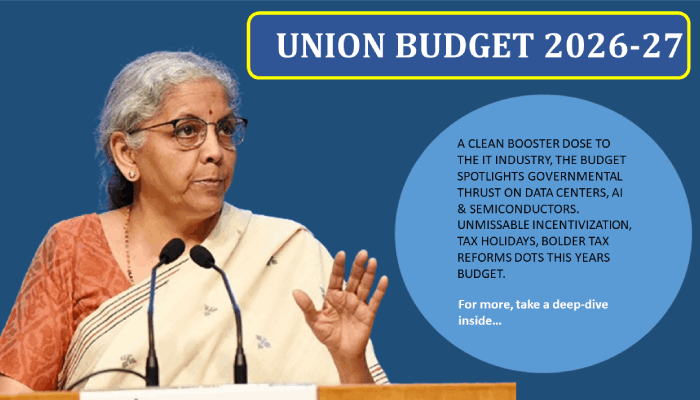
On Sunday, Union Finance Minister Nirmala Sitharaman presented the Union Budget 2026-27 in the Lok Sabha, laying out an economic blueprint for the country, which is anchored in growth, investment and fiscal stability.
The budget announced a sharp governmental push to public capital expenditure at ₹12.2 lakh crore for 2026-27. The budget stressed upon the government’s renewed outlook with a clear thrust on manufacturing, semiconductors and MSMEs.
“The long-term policy framework for data centres up to 2047 positions India among the leading global destinations for AI and cloud infrastructure.”
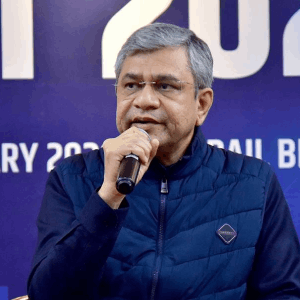
– Shri Ashwini Vaishnaw, Minister for Electronics and Information Technology, Railways and Information & Broadcasting, Government of India
“The Budget introduced several key measures to accelerate growth in the Electronics, Information Technology and Artificial Intelligence ecosystem,” the Union Minister for Electronics and Information Technology, Railways and Information & Broadcasting, Shri Ashwini Vaishnaw, said while addressing the media.
“The Union Budget 2026-27 is a significant step in strengthening India’s digital and data infrastructure. By providing long-term incentives and a clear safe harbour framework for data centres and cloud services, the government is creating an ecosystem that encourages global investment and drives technological innovation.”
– Hemant Tiwari, managing director & vice president, India & SAARC, Hitachi Vantara
India Inc has been at one in rendering a warm welcome to the immensely IT-friendly budget. Welcoming the budgetary measures, Warren Harris, CEO & MD, Tata Technologies Ltd., said, “We welcome this Budget as a strong enabler of the Viksit Bharat vision, reinforcing India’s ambition to emerge as a global leader in digital engineering and R&D. Enhanced support for electronics manufacturing, including the expansion of component incentives to INR 40,000 crore along with streamlined IT services frameworks and higher safe harbour thresholds of INR 2,000 crore will further strengthen India’s innovation ecosystem. Incentives for aviation manufacturing and MRO will accelerate high-value engineering opportunities across mobility and aerospace.
“Overall, this Budget creates a robust platform for innovation-driven growth, advanced manufacturing and global technology leadership,” he added.
Thrust on AI Data Centres
Highlighting the focus on digital infrastructure, Shri Ashwini Vaishnaw said that data centres, particularly AI data centres, play a critical role in the infrastructure layer of the AI architecture. He noted that investments of around USD 70 billion are already underway in India, with announcements of investments of around USD 90 billion.
“As digital infrastructure scales, complexity, and cyber risk increase. Cyber risk today is continuous, not episodic, and organizations need to plan for resilience as a core business requirement. Embedding security into digital foundations will be critical to protecting data, ensuring continuity, and maintaining trust as India’s digital economy continues to expand.”
–Vishak Raman, Vice President of Sales, India, SAARC, SEA & ANZ, Fortinet
Amit Kumar Tyagi, CEO, TrueReach AI, said, “The Union Budget 2026 is a clarion call for the ‘Intelligence-First’ era. By proposing a tax holiday until 2047 for cloud services using Indian data centers and utilizing the ₹10,300 crore IndiaAI Mission to provide compute at a subsidized rate, the government has eliminated the cost barriers to high-end innovation.
“We believe that secure-by-design digital systems and robust cyber resilience are critical to unlocking the full value of AI-led transformation. We welcome initiatives that strengthen trust-based digital frameworks and enable organizations to adopt advanced technologies with confidence.”
-Jaydeep Singh, General manager for India, Kaspersky
What stands out is the strong alignment between policy intent and execution, from sovereign cloud enablement and AI-ready data centre capacity to accelerated city-level digital infrastructure across Tier 2 and Tier 3 markets. This clearly favours players with pan-India footprints and the ability to deliver connectivity, data centres, cloud, and managed services as an integrated stack. As enterprises, governments, and high-tech industries increasingly run mission-critical, data-intensive workloads, continued support for compliant, India-hosted cloud and resilient networks will be essential. The Budget lays a solid foundation for infrastructure-led digital growth and positions integrated infrastructure providers to emerge as default digital partners in India’s next phase of industrial, cloud, and AI-driven expansion,” commented Pinkesh Kotecha, Chairman and MD, Ishan Technologies.
“Coupled with the focus on responsible AI, governance applications, and real-world tools like multilingual AI for farmers, this aligns perfectly with Blackstraw AI’s mission of helping organisations operationalise AI through robust data foundations, intelligent automation, and measurable outcomes.”
– Atul Arya, Founder & CEO, Blackstraw AI
“The Finance Minister’s Union Budget 2026 presentation reinforces a critical shift in India’s growth narrative, where digital transformation, AI adoption, and infrastructure expansion are moving in tandem,” said Aditya Prabhu, CEO & Co-Founder, Secutech Automation. “No doubt, it’s a clear signal that technology-first, resilient systems will underpin India’s next phase of growth. For the security automation ecosystem, this is an opportunity to align closely with national priorities around digital trust, system reliability, and future-ready infrastructure”
“The Union Budget 2026 strikes a thoughtful balance between growth ambition and on-ground business realities. By simplifying GST, strengthening domestic manufacturing and placing MSMEs at the centre of the growth agenda, the government has addressed some of the most pressing needs of Indian enterprises.”
– Alok Nigam, Managing Director, Brother International (India)
A Helping Hand to MSMES
The Budget sends a clear signal of policy continuity with a strong focus on growth anchored in technology, infrastructure and MSME development. The emphasis on capital expenditure, support for Champion MSMEs and targeted measures to deepen credit access is likely to create positive multiplier effects across the economy.
“The focus on scaling renewables i.e. wind, solar, and battery technologies alongside energy storage systems aims to address the current gap between installed power capacity and actual energy generation, strengthening reliance on non-fossil fuel sources. While conventional fuel sources continue to stay, these measures pave the way for a cleaner, more reliable energy mix.”
– Praveen Kakulte, Founder and CEO of POWERCON Group
“The announcements around data centres and digital infrastructure further strengthen the foundation for data-led financial systems. As lenders increasingly rely on technology and real-time insights to assess risk and expand credit, the availability of reliable financial data will be critical in enabling MSMEs to scale sustainably. Overall, the Budget reinforces confidence in a more transparent, efficient and inclusive credit ecosystem, aligned with our commitment to enabling smarter MSME finance,” said Chirag Shah, Founder & CEO of Pulse.
“Supporting women-led businesses and investing in future-ready skills will drive higher participation while enhancing productivity and long-term growth. Overall, the budget is well aligned with building a resilient, technology-driven, and gender-inclusive services economy.”
– Ms. Sonali Chowdhry, CEO-OfficeNet
Tax holiday till 2047
To further encourage long-term investments, Budget 2026-27 has proposed a tax holiday till 2047 for foreign companies providing cloud services to customers globally using data centre services from India. Such companies will provide services to Indian customers through an Indian reseller entity. A safe harbour of 15 percent on cost has also been proposed where the data centre service provider in India is a related entity.
“As industries navigate rapid technological change, the government’s spotlight on scale, execution, and investments in connectivity, smart infrastructure, and talent development provides a clear and credible roadmap for sustainable and inclusive growth.”
-Sunil Mathur, MD and CEO, Siemens Limited
“The proposed tax holiday till 2047 for foreign cloud service providers setting up data centres in India, supported by a 15% safe harbour framework for related-party data services, strengthens policy certainty for global investors. By aligning capital investment, fiscal stability, and regional strengths with strategic resources, the Budget reinforces a sustained growth narrative, positioning India as a credible global hub for advanced manufacturing and digital infrastructure,” said Tejesh Kodali, Group Chairman, Blue Cloud Softech Solutions Limited.
“The continued focus on strengthening the MSME ecosystem, including targeted efforts to encourage women entrepreneurs, will help broaden participation and deepen livelihood creation across regions.”
–Vidit Aatrey, Co-founder, Managing Director and CEO at Meesho
Bruce Keith, CEO & Co-Founder, InvestorAi, said, “The ongoing fiscal discipline and general move towards tax harmonisation is welcome. Adding more heft and focus on education in a world where AI is changing the rules also makes sense. Perhaps the biggest surprise to me was the increases in Securities Transaction Tax (STT) on futures and options premium by 150% and 50% respectively.”
These long-term tax incentives will help position India as a global data and cloud services hub, incentivising hyperscalers (e.g., AWS, Google, Microsoft) and other cloud companies to expand local infrastructure and innovation.
“At a time when global macro headwinds are reshaping tech spending, the Budget brings much-needed certainty for India’s IT services and GCC ecosystem. The unified IT services safe harbour framework with a predictable 15.5% margin, along with faster closure of advance pricing agreements, meaningfully strengthens ease of doing business and reinforces India’s competitiveness as a global delivery and engineering hub.”
Piyush Jha, Group Vice President & Head – APAC at GlobalLogic
This translates into more local jobs, stronger digital ecosystem growth, and deeper technical skills development.
“For sovereign Indian platforms like Yotta, this evolution creates strong complementarity rather than competition. As hyperscalers localise through Indian entities and expand their India footprint, demand for hyperscale data centres combined with GPU-dense, AI-optimised infrastructure will rise sharply – areas where Indian operators with deep local execution capabilities, regulatory alignment, and energy-backed capacity are uniquely positioned,” Sunil added.
“The long-term policy framework for data centres up to 2047 positions India among the leading global destinations for AI and cloud infrastructure,” said Vaishnaw.
“This will attract large global cloud investment, drive massive new data centre capacity, create a huge multiplier effect for power, cooling, critical infrastructure and digital ecosystem players. We firmly believe that this budget will accelerate India’s emergence as a global digital infrastructure powerhouse.”
-Subhasis Majumdar, Managing Director, Vertiv India
Focus on rare earth permanent magnet corridors
Given the critical importance of rare earths for future digital supremacy and a pathbreaking EV revolution, the government has upped its ante to position India as a leading rare earth producer to reduce dependence on China.
“The Union Budget 2026 is a masterclass in structural reform, decisively positioning India as the world’s preferred engine for advanced manufacturing, digital engineering, and sustainable innovation,” says Warren Harris, CEO & MD, Tata Technologies. “The government’s focus on rare earth permanent magnet corridors will significantly strengthen domestic supply chains critical for EVs, aerospace and advanced electronics sectors, which rely on deep engineering expertise.”
“We see this as a clear catalyst for India’s rise as a preferred global hub, enabling operators like Colt DCS to scale sustainably and deliver the trusted, customer-centric infrastructure that global hyperscalers demand.”
– Pratap Mane, President & Country Head – India, Colt DCS
India Semiconductor Mission (ISM) 2.0 Takes Wings
The Budget has also announced the launch of India Semiconductor Mission (ISM) 2.0, building upon the strong foundation created under ISM 1.0, which established a completely new and foundational semiconductor industry in India.
ISM 2.0 will focus on designing and manufacturing semiconductor equipment in India, manufacturing of materials used in semiconductor production, creation of a large design ecosystem, and further strengtheningof talent development initiatives. A provision of Rs. 1,000 crore has been made for ISM 2.0 for FY 2026-27.
For companies like RackBank, this Budget strengthens confidence to expand capacity, attract global capital and support the delivery of scalable, secure and sovereign digital infrastructure for both Indian and international customers.”
–Narendra Sen, Founder & CEO, RackBank Data Centers
“By launching India Semiconductor Mission (ISM) 2.0 with a fortified INR 40,000 crore outlay for electronics manufacturing, the government has transitioned our ecosystem from assembly-led growth to high-value, full-stack IP and component sovereignty. The strong push on STEM education, AI integration and large-scale youth skilling is equally impactful. Initiatives to embed AI-enabled learning systems and expand research infrastructure reflect a clear commitment to building future-ready talent for Industry 4.0,” said Warren Harris, CEO & MD, Tata Technologies.
For this framework to create measurable impact we need coordinated implementation with industry and academia, greater focus on data and compute infrastructure, and skilling pathways that align with the evolving demand for specialised AI talent.”
–Sachin Panicker, Chief AI Officer, Fulcrum Digital
“The Union Budget 2026–27 charts a decisive course for India’s evolution into a global technology leader. “The enhanced capital outlay of ₹12.2 lakh crore and the launch of the India Semiconductor Mission 2.0,” said Meenu Singhal, Regional Managing Director, Socomec Innovative Power Solutions, “reaffirm the government’s commitment to deep-tech indigenization. The ₹40,000 crore allocation for electronics component manufacturing is a strategic intervention that propels the ecosystem toward advanced engineering and value creation. The focus on establishing Rare Earth Corridors further strengthens the foundation for a secure and self-reliant supply chain. The budget’s emphasis on providing skilling programmes will encourage the youth in providing quality employment opportunities.”
“Overall the placement of DeepTech as a catalyst for inclusive growth while addressing the necessary conditions for this has received the necessary focus and boost in the budget through the various schemes announced.”
–Dr. Sujata Seshadrinathan, Co-Founder & Director, Digital Transformation, Basiz
“This Budget brings together multiple strands of India’s manufacturing and technology growth story in a balanced and forward-looking manner,” said Benjamin Lin, President, Delta Electronics India.The ₹40,000 crore allocation for India Semiconductor Mission 2.0 and the enhanced outlay for electronics components manufacturing point to a clear focus on scale, depth, and ecosystem development.”
“The continued push under ISM 2.0, together with the increased outlay for the Electronics Components Manufacturing Scheme and the reduction in duties on batteries, provides a more supportive environment for domestic powerbank and electronics manufacturers to scale operations and invest in innovation.”
-Ashok Rajpal -Managing Director – Ambrane India
On the Semiconductor push, Manu Iyer, General Partner and Co-founder, Bluehill.VC, noted, ‘The launch of India Semiconductor Mission 2.0 in the Union Budget 2026-27 is a watershed moment for India’s technology and manufacturing landscape. By significantly expanding support for domestic semiconductor equipment, materials, design, and supply-chain capabilities, ISM 2.0 will accelerate India’s journey towards self-reliance in advanced chips and position the country as a globally competitive semiconductor hub. Coupled with the strategic decision to establish dedicated rare earth corridors across mineral-rich states — strengthening mining, processing, research and manufacturing of critical minerals — this Budget not only deepens the foundation for high-tech growth but also enhances supply-chain resilience in sectors from electronics to defense and clean energy. Together, these initiatives will drive innovation, high-skilled employment, and India’s role in resilient global value chains’
“By directly linking education, skilling, employment, and entrepreneurship, the government is building the connective tissue needed for sustainable growth in the services sector—especially as India aspires for a 10% global share by 2047.”
-Sandeep Kumar Jain, Managing Director, CDK Global
Kulpreet Sahni, Founder & CEO, Chiltier, said, The Budget’s emphasis on semiconductors, rare earth corridors, and industry-driven R&D is a big positive for the hardware and deep tech ecosystem in India. For climate tech and advanced wearables, the ability to tap into domestic components, power electronics, and materials is essential to developing robust and affordable solutions at scale. The emphasis on skills and research centers is equally important.”
“The Budget lays a solid foundation for infrastructure-led digital growth and positions integrated infrastructure providers to emerge as default digital partners in India’s next phase of industrial, cloud, and AI-driven expansion”
– Pinkesh Kotecha, Chairman and MD, Ishan Technologies
Higher Allocation for Electronics Components Manufacturing Scheme
The allocation for the Electronics Components Manufacturing Scheme (ECMS)has been increased from about Rs. 22,000 crore to Rs. 40,000 crore in the Budget 2026-27. There has already been strong industry response to the scheme, which has received 149 applications, significantly higher than the expected 50 to 55 applications. The enhanced allocation will help maintain the momentum generated by the scheme.
With the government’s infrastructure push creating enhanced connectivity through high-speed rail corridors and improved public infrastructure, we’re looking at a consumption revolution that will redefine how brands, both native and global, approach the Indian market.
Ms. Manasa Rajan, Co-Founder & CEO, Jupiter Meta Labs
“What stands out in the Union Budget 2026 is the scale, consistency, and seriousness with which the government is approaching electronics and advanced manufacturing. The launch of India Semiconductor Mission 2.0 with an outlay of ₹40,000 crore, along with the expansion of the electronics components manufacturing scheme to a similar level, clearly signals a long-term commitment to building strong domestic capabilities,“ said Niranjan Nayak, MD, Delta Electronics India.
“The Union Budget 2026 marks a decisive and well-thought-out shift in how India approaches cloud and data centres, recognising them as long-term strategic infrastructure that underpins AI adoption, digital public services, and economic growth.”
– Sunil Gupta, Co-founder, CEO & Managing Director, Yotta Data Services.
“Importantly, the focus goes beyond manufacturing capacity to include full-stack design, development of Indian intellectual property, skill creation, and stronger supply-chain resilience. This reflects a practical understanding of how globally competitive technology ecosystems are built. Such clarity and continuity in policy direction give industry the confidence to plan long-term investments, deepen local value addition, and steadily move India up the electronics manufacturing value chain,” added Niranjan.
The customs duty exemption on solar glass manufacturing inputs, along with the continued support for Battery Energy Storage Systems, reinforces the government’s commitment to building a robust domestic clean energy ecosystem.
– Saurabh Marda, Co-Founder & Managing Director – Freyr Energy
IT Services Simplification and Safe Harbour Provisions
IT services remain India’s largest exported service sector, with exports exceeding USD 220 billion. To provide tax certainty and support industry growth, the Budget proposes new safe harbour provisions for IT and IT-enabled services with higher thresholds and competitive margins.
All IT services, including software development services, IT-enabled services, knowledge process outsourcing and contract R&D services, have been proposed to be grouped under a single category of Information Technology Services, with a common safe harbour margin of 15.5 percent. The threshold for availing safe harbour has been proposed to be increased substantially from Rs. 300 crore to Rs. 2,000 crore, with approvals through an automated, rule-based process.
“The Union Budget 2026-27 is a game-changer for India’s travel and mobility ecosystem, and we at Yatri are energised by the government’s vision to democratize tourism and transportation access across the country.”
– Reeva Sakaria, Co-Founder, Yatri
The Budget also proposes fast-tracking the Unilateral Advance Pricing Agreement (APA) process for IT services and extending the facility of modified returns to associated entities entering into APA.
Pankit Desai, Co founder CEO, Sequretek, said, “The Union Budget 2026 made the growth of India’s digital economy as one of the core focus area of growth of the economy. With strong GDP numbers already released, the FM focused on several initiatives that can bring more capital in the country. The announcement on raising the safe harbour limit to Rs 2000 crore for IT and ITES companies will benefit the sector immensely.”
Thus, Union Budget 2026-27 boosts the IT industry by grouping software, IT-enabled services, and R&D under a single category with a 15.5% safe harbour margin, increasing the eligibility threshold to ₹2,000 crore. As we have already discussed, a major focus includes a tax holiday until 2047 for foreign cloud service providers using Indian data centres.
‘Indian Semicon is at a very nascent stage and needs a lot of hand holding and policy support, ISM 2.0 will certainly help in mushrooming genuine Semicon use cases and will make India self reliant. Additionally ₹ 40000 CR deployment for electronic components will help resolving supply issues for development.”
– Anil Joshi, Managing Partner, Unicorn India Ventures
Subhakar Pappula, Founder & CEO, Flamingo Aerospace, believes, “The budgetary measures will accelerate aircraft manufacturing, expand MRO infrastructure, create skilled employment, and reinforce India’s emergence as a dependable regional aviation and aerospace hub. The Budget’s broader emphasis on capital investment, including customs duty exemptions on capital goods across key sectors, along with the proposal to institutionalise services-sector policy through a high-powered committee assessing the impact of AI on jobs, reflects a forward-looking approach to competitiveness and workforce readiness.”
Together, these steps strongly advance the objectives of Make in India and Atmanirbhar Bharat by enabling the aviation sector to build resilience, deepen value addition, and move up the global value chain.
“By significantly expanding support for domestic semiconductor equipment, materials, design, and supply-chain capabilities, ISM 2.0 will accelerate India’s journey towards self-reliance in advanced chips and position the country as a globally competitive semiconductor hub.“
– Manu Iyer, General Partner and Co-founder, Bluehill.VC
Without doubt, amidst glaring global uncertainties, the budget brings in much needed benefits for the country’s IT industry. The measures announced in the budget aim to solidify India’s position in the global AI and cloud computing market.
“The focus on cloud and data centre infrastructure, supported by long-term tax incentives and safe harbour clarity, further strengthens India’s attractiveness as a global base for digital and AI-led services. The consolidation of IT and IT-enabled services into a unified sector complements this vision by improving ease of doing business and policy predictability. For companies like Happiest Minds, this reinforces our belief that sustainable AI success will be human-led built on responsible innovation, continuous skilling, and deep industry government collaboration,” said Venkatraman Narayanan, MD, Happiest Minds Technologies.
“The convergence of the India AI Mission with ₹ 10,000 Cr+ and the government’s aggressive push for R&D allows us to tackle the ‘Iron Triangle of legal tech: Cost, Speed and Accuracy.”
– Hitesh Jirawla, Founder & CEO, Cubictree
Saurabh Marda, Co-Founder & Managing Director – Freyr Energy, said, “The customs duty exemption on solar glass manufacturing inputs, along with the continued support for Battery Energy Storage Systems, reinforces the government’s commitment to building a robust domestic clean energy ecosystem. Combined with the PM Surya Ghar program’s momentum—now serving 2.5 lakh households—we’re seeing strong tailwinds for distributed solar adoption in India.”
Let’s walk through these in greater details:
Unprecedented Data Centre Push
The budget makes provisions for a tax holiday until 2047 for foreign companies providing cloud services via Indian data centres, provided they use local resellers for domestic customers. A 15% safe harbour on cost is proposed for Indian data centre providers. This is going to prove to be a propelling force for the country’s nascent data centre industry, and in turn, for the yet to be fully unfolded AI revolution.
The Make in India, Make for the World, has received a further impetus with the ₹10,000 crore SME Growth Fund that will empower the growth engine of our economy to adopt emerging tech, meet risk capital requirements to become globally competitive.
– Pankit Desai, Co founder CEO, Sequretek
“The Union Budget sends a strong and reassuring signal for data centre and cloud investments in India. The proposed tax holiday till 2047 for foreign companies setting up data centres in the country provides long-term visibility and confidence for global players evaluating India as a strategic base for their cloud operations. The introduction of a defined safe harbour of 15% on cost for data services co-provided from India by related entities further brings clarity to cross-border operating models and reduces uncertainty around transfer pricing. Together, these measures simplify compliance, lower execution risk, and make it easier for companies to scale data centre and cloud-led services from India,”said Umesh Shah, Director, New Age Technologies at Orient Technologies Limited.
“Highly transformative is the tax holiday until 2047 for cloud service providers leveraging Indian data centers. This landmark policy positions India as a global hub for cloud computing, unlocking opportunities in hyperscale infrastructure, enterprise cloud solutions, cybersecurity, and AI-powered managed services—areas central to Ensono’s expertise, ” said Mrs. Veena Khandke, SVP & Managing Director of Ensono India.
By aligning capital investment, fiscal stability, and regional strengths with strategic resources, the Budget reinforces a sustained growth narrative, positioning India as a credible global hub for advanced manufacturing and digital infrastructure.”
– Tejesh Kodali, Group Chairman, Blue Cloud Softech Solutions Limited
“The Union Budget 2026 marks a decisive and well-thought-out shift in how India approaches cloud and data centres, recognising them as long-term strategic infrastructure that underpins AI adoption, digital public services, and economic growth. The announcement of a tax holiday till 2047 for global cloud operators setting up data-centre infrastructure in India is a strong signal aimed at accelerating capital inflow, early capacity creation, and faster enterprise cloud adoption at scale,” Sunil Gupta, Co-founder, CEO & Managing Director, Yotta Data Services.
At the same time, the introduction of a clear safe harbour provision including a defined 15% tax on cost for cloud and data-centre services delivered through Indian operating entities addresses a different but equally important objective: long-term certainty and scalability. In practice, while the tax holiday helps global players enter India quickly, large-scale and mission-critical operations naturally gravitate towards Indian entities because predictability in taxation, compliance, and regulatory alignment matters far more than headline tax rates as businesses scale.
“The Union Budget 2026 represents the Government of India’s bold commitment to positioning the IT services sector as the cornerstone of ‘Viksit Bharat.’ As a global leader in cloud migration, mainframe modernization, and digital transformation, Ensono applauds game-changing reforms that boost ease of doing business.”
-Veena Khandke, SVP & Managing Director of Ensono India
As cloud and AI workloads move from experimentation to regulated and business-critical deployment, global cloud providers are therefore unlikely to own and operate all physical infrastructure themselves. Instead, they will increasingly adopt asset-light models outsourcing both colocation and high-performance GPU infrastructure to trusted Indian partners while focusing on platforms, software, and customer engagement. This allows them to scale rapidly, manage capital and technology risk, and operate within a stable and transparent tax framework under the safe harbour regime.
“In that sense, Budget 2026 does more than attract global investment. It expands the overall AI and cloud market while anchoring global platforms within the Indian ecosystem, reinforcing the strategic role of Indian cloud and data-centre companies as the sovereign, compliant, AI-ready infrastructure backbone of India’s digital future,” added Sunil.
The real impact of this Budget is a workforce that’s better prepared for the job’s employers are ready to create, shifting the focus from simply increasing hiring to enabling better hiring.”
–Sashi Kumar, Managing Director, Indeed India
Adding fillip to a globally competitive, self-reliant ICT ecosystem
This Budget reinforces India’s ambition to build a globally competitive, self-reliant ICT ecosystem by strengthening both manufacturing depth and distribution efficiency. “The expanded focus on domestic electronics components, semiconductor capabilities, will accelerate local assembly while improving cost competitiveness across key ICT categories. Measures supporting cloud infrastructure, data centres, and a simplified IT services framework bring long-needed clarity for technology providers and distributors alike. Together with continued investments in digital public infrastructure and connectivity, these initiatives create a strong foundation for sustained ICT growth and wider technology adoption across Indi,” said Rajesh Goenka, CEO, Rashi Peripherals Limited.
Unified IT Services Category & Simplified Tax Treatment
Multiple IT services including software, ITeS, KPO, as well as R&D are grouped under one category with a 15.5% safe harbour margin. The threshold for this, which allows for reduced, automated tax, is increased to ₹2,000 crore, with a 5-year, rule-based process. This will rationalize tax structures across the IT spectrum, helping the entire industry as a whole.
“The focus on cloud and data centre infrastructure, supported by long-term tax incentives and safe harbour clarity, further strengthens India’s attractiveness as a global base for digital and AI-led services.”
So, how is it going to impact the IT firms, going ahead?
Well, the budgetary measures will doubtlessly simplify compliance and policy interpretation across sub-segments of the IT industry. This also reduces disputes over how different services are classified for tax and transfer-pricing purposes. This, again will help both Indian firms and Global Capability Centres (GCCs) plan long-term operations more predictably. Therefore, overall, this makes India a more attractive location for large multinationals to base higher-value digital and software operations — boosting exports and investments.
Commenting on the budget, Hemant Tiwari, Managing Director – India & SAARC, Hitachi Vantara, said, “The Union Budget 2026-27 is a significant step in strengthening India’s digital and data infrastructure. By providing long-term incentives and a clear safe harbour framework for data centres and cloud services, the government is creating an ecosystem that encourages global investment and drives technological innovation. These measures will accelerate the growth of world-class data centres, enable secure and efficient cloud operations, and foster the adoption of emerging technologies such as AI.
He further added, “By supporting infrastructure development across Tier 2 and Tier 3 cities and facilitating a robust digital services ecosystem, the budget positions India to become a global hub for data, cloud, and IT services, while creating new opportunities for talent and sustainable economic growth.”
“The Budget acknowledges that banks are not the only answer to India’s financing needs and that complex, niche industries require specialised financing institutions that offer more than simply credit, by truly comprehending the asset lifecycle. This shift moves financing away from one-size-fits-all lending towards more focused, developmental support.”
– Kunal Mundra, Founder and CEO, Astranova Mobility
Generating AI Talent Pool
Next to Tax Simplification, the budget as expected puts renewed thrust upon AI. It has emphasized AI, with a clear focus on skill development to match industry needs through an Education-to-Employment (E2E) committee.
Hitesh Jirawla, Founder & CEO, Cubictree, said, “There has been a huge push from the Govt of India to digitise the courts in India, Now with the legal sector standing at the junction of a quantum leap. The convergence of the India AI Mission with ₹10,000 Cr+ and the government’s aggressive push for R&D allows us to tackle the ‘Iron Triangle of legal tech: Cost, Speed and Accuracy. Having navigated this landscape for a decade and a half, we see the government’s multiple AI Innovation Fund is not just as a fund, but as a validation that Legal AI is the new infrastructure of a developed India.”
The National Digital Knowledge Grid and education-to-employment focus will unlock new-age opportunities for creators, researchers, local experts, startups and MSMEs, creating a vibrant ecosystem of flexible, skills-driven jobs. Coupled with the ₹10,000 crore fund-of-funds for startups, the Budget strengthens the link between education, entrepreneurship and employability, laying the foundation for a future-ready workforce,” said Mythri Kumar, Co-Founder, TimBuckDo.
“The Budget sends a clear signal of policy continuity with a strong focus on growth anchored in technology, infrastructure and MSME development. The emphasis on capital expenditure, support for Champion MSMEs and targeted measures to deepen credit access is likely to create positive multiplier effects across the economy.
–Chirag Shah, Founder & CEO of Pulse.
Focus on Orange Economy
The Union Budget 2026 clearly recognizes the Orange Economy, particularly the AVGC sector, as a strategic employment and growth engine for India. Measures such as setting up AVGC content creator labs across vocational training and specialized institutes, strengthening creative technology institutions, and the continued thrust under Skill India reflect a strong focus on industry-aligned, job-ready skilling.
“With the AVGC industry expected to require over 2 million skilled professionals by 2030, sustained hands-on training, curricula aligned with emerging technologies, and deep collaboration between government, academia, and skilling partners will be critical to building a globally competitive and future-ready creative workforce,” saidSandip Weling, Whole-time Director and Chief Business Officer – Global Retail, Aptech Limited.
“The Union Budget 2026 is a clarion call for the ‘Intelligence-First’ era. By proposing a tax holiday until 2047 for cloud services using Indian data centers and utilizing the ₹10,300 crore IndiaAI Mission to provide compute at a subsidized rate, the government has eliminated the cost barriers to high-end innovation.
–Amit Kumar Tyagi, CEO, TrueReach AI
Sashi Kumar, Managing Director, Indeed India, said, “Measures like the Education-to-Employment and Enterprise Standing Committee, sector-specific skilling in healthcare and services, and industry-linked training in textiles directly target the employability gap. Over the next 6–12 months, these steps will show up as more skills-aligned hiring, especially across labour-intensive sectors and MSMEs. The real impact of this Budget is a workforce that’s better prepared for the job’s employers are ready to create, shifting the focus from simply increasing hiring to enabling better hiring.”
The Union Budget 2026–27 marks a pivotal step in shaping India’s future-ready learning ecosystem. By strengthening education with robust skilling initiatives and integrating emerging technologies like artificial intelligence, the government has laid the foundation for a workforce that’s not just employable but globally competitive.
Deepak Verma, CEO, EnglishHelper, said, “The emphasis on AI, digital capacities, and bridging education with employment pathways reflects an understanding that language skills, tech fluency, and adaptive learning are core to India’s next wave of innovation. Budgets like this empower learners and educators alike to harness technology responsibly and meaningfully, ensuring that India’s human capital thrives in an AI-driven world.”
“With the ₹1 lakh crore RDI corpus now accessible for deep-tech, and a goal to add $1.7 trillion to the economy by 2035 through AI, the stage is set for Indian enterprises to lead the global wave of agentic automation and trusted AI governance.”
-Srikanth Chakkilam, CEO and Executive Director, Covasant Technologies
Fast-Tracking APAs
Focus on Education & Training
Education and training has received due attention to address the gaping talent deficit in the industry. An allocation of ₹1,250 crore is being made for the National Apprenticeship Training Scheme (NATS) for FY27, aiding the skill pipeline for the IT sector.
There is added provision to fasttrack APAs. Unilateral Advanced Pricing Agreements (APAs) for IT services are being fast-tracked, aiming for completion within two years to reduce litigation.
“The announcement of the ‘Bharat Vistar’ multilingual AI tool and the Education to Employment Standing Committee is particularly significant. It shows a dual commitment to innovation and inclusive growth, ensuring that as AI scales, our workforce remains future-ready. With the ₹1 lakh crore RDI corpus now accessible for deep-tech, and a goal to add $1.7 trillion to the economy by 2035 through AI, the stage is set for Indian enterprises to lead the global wave of agentic automation and trusted AI governance,” said Srikanth Chakkilam, CEO and Executive Director, Covasant Technologies.
“The Union Budget 2026–27 charts a decisive course for India’s evolution into a global technology leader. The enhanced capital outlay of ₹12.2 lakh crore and the launch of the India Semiconductor Mission 2.0 reaffirm the government’s commitment to deep-tech indigenization.”
– Meenu Singhal, Regional Managing Director, Socomec Innovative Power Solutions
Higher Safe Harbour Threshold & Uniform Margin
The safe harbour threshold for IT services has been raised from ₹300 crore to ₹2,000 crore, with a uniform safe harbour margin of 15.5% introduced for eligible IT/ITeS companies.
What this simply means is that the safe harbour rules will now allow companies to pay tax on a presumed profit margin, reducing lengthy audits and transfer-pricing disputes. With the higher threshold, mid-sized and fast-growing firms now qualify — reducing compliance burden and tax uncertainty.
A standard 15.5% margin will simplify cross-border pricing for both Indian IT exporters and foreign tech units operating here.
This will go a long way in encouraging reinvestment in the country, faster decision-making, and potentially lower effective compliance costs for many companies.
Tax Clarity for Global Tech & GCCs
This year’s budget will also be remembered as one that has spelt crystal clarity on taxation on foreign tech firms. The budget proposes on how foreign tech units — including GCCs (Global Capability Centres) — are taxed in India, by applying the same safe harbour regime and margin rules. This cuts down tax ambiguity regarding foreign firms wanting to scale services from India.
Thus, these clear, predictable tax rules will prove to be a major factor in attracting foreign investment for the sector. This will help foreign farm decide where to invest and where to locate their key operations.
“The ₹40,000 crore allocation for India Semiconductor Mission 2.0 and the enhanced outlay for electronics components manufacturing point to a clear focus on scale, depth, and ecosystem development.
–Benjamin Lin, President, Delta Electronics India
Encouraging Emerging Tech
Union Budget 2026- 27 reinforces the government’s strong focus on artificial intelligence and emerging technologies as force multipliers for governance, economic growth, and service delivery, while strengthening the enabling environment for digital infrastructure through its emphasis on the services sector and measures to attract global business. While there isn’t a major standalone “AI subsidy” line item this year, experts note that the budget language positions AI as core digital infrastructure, emphasizing data, cloud, and compute capabilities. There is clearly increased funding for AI tools, skill development, and infrastructure has been signalled in broader tech sections. This will spur more demand for AI-infused services from enterprise clients (e.g., AI ops, ML engineering, automation) and boost jobs in cutting-edge domains.
Jaydeep Singh, General manager for India, Kaspersky, said, “Continued support through initiatives such as the IndiaAI Mission, National Quantum Mission, and Research, Development and Innovation Fund reflects a clear intent to build a future-ready digital economy. Proposals around data centre-led global cloud services and safe-harbour frameworks for IT services signal a commitment to deepening India’s digital backbone. As City Economic Regions and Tier II and Tier III infrastructure expand, demand for reliable, secure enterprise connectivity will rise.”
The emphasis on emerging technologies with AI positioned as a force multiplier for governance and productivity signals a clear shift from policy intent to implementation. As digital services, AI platforms, and data-driven systems scale across sectors, strong cybersecurity becomes essential to ensuring trust, continuity, and reliability.
“What stands out in the Union Budget 2026 is the scale, consistency, and seriousness with which the government is approaching electronics and advanced manufacturing.“
– Niranjan Nayak, MD, Delta Electronics India
“At Kaspersky, we believe that secure-by-design digital systems and robust cyber resilience are critical to unlocking the full value of AI-led transformation. We welcome initiatives that strengthen trust-based digital frameworks and enable organizations to adopt advanced technologies with confidence,” added Jaydeep.
Srikanth Chakkilam, CEO and Executive Director, Covasant Technologies, said, “The Union Budget 2026 is a definitive roadmap for India’s transition from a digital-first to an intelligence-first nation. By targeting a 10% share of the global services market by 2047, the Finance Minister has rightly identified AI as the ‘growth multiplier’ for our economy. At Covasant, we believe the expansion of the IndiaAI Mission, which has already deployed 38,000 GPUs, provides the critical infrastructure needed to move beyond experiments to large-scale, sovereign AI deployment.”
Elevating DeepTech as a catalyst for inclusive growth
Overall the placement of DeepTech as a catalyst for inclusive growth while addressing the necessary conditions for this has received the necessary focus and boost in the budget through the various schemes announced. “The budget also recognised the need for research and development in several sectors like rare earth, semiconductor technology and DeepTech which will propel India towards development of products in these fields, where we are lacking now,” said Sujata Seshadrinathan, Co-Founder and Director, Digital Transformation, Basiz Fund Service Private Limited
“The National Digital Knowledge Grid and education-to-employment focus will unlock new-age opportunities for creators, researchers, local experts, startups and MSMEs, creating a vibrant ecosystem of flexible, skills-driven jobs.”
–Mythri Kumar, Co-Founder, TimBuckDo
SNAPSHOT OF THE BUDGETARY IMPACT ON INDIAN IT
Area
Likely Impact
Tax certainty & compliance
Strong — simplifies planning, reduces disputes
Mid-tier IT firms
Major beneficiaries — higher safe harbour limits
Global tech investments
Positive — tax clarity and incentives attract GCCs
Cloud & data-centre ecosystem
Very high — long-term tax holiday boosts infrastructure growth
AI & advanced tech adoption
Growing momentum — cloud and compute focus
Exports & global services leadership
Reinforced position for India as a delivery hub
Finally…
The Union Budget 2026 has placed the IT and services sector firmly at the heart of India’s growth agenda. With path-breaking announcements including a significant expansion of the Safe Harbour regime with higher thresholds, automated approvals and faster APAs to improve tax certainty, the government looks serious to position India as a global hub for data centres and cloud services. Complementing this is a strong push on future-ready skilling through AI, quantum technologies and STEM, aimed at building a globally competitive digital workforce.
In a nutshell, the Union Budget 2026–27 reinforces India’s IT sector through myriad measures. The government has clearly brought in decisive measures and IT-friendly provisions through tax simplification, global investment incentives, compliance certainty, and strategic support for digital infrastructure. The budget has succeeded in introducing timely and prudent measures to help the country ride the AI wave to cement its role as a global IT and digital services powerhouse while lowering barriers for mid-sized players.